How Tyll Solar Is Defining the Next Generation of PVT
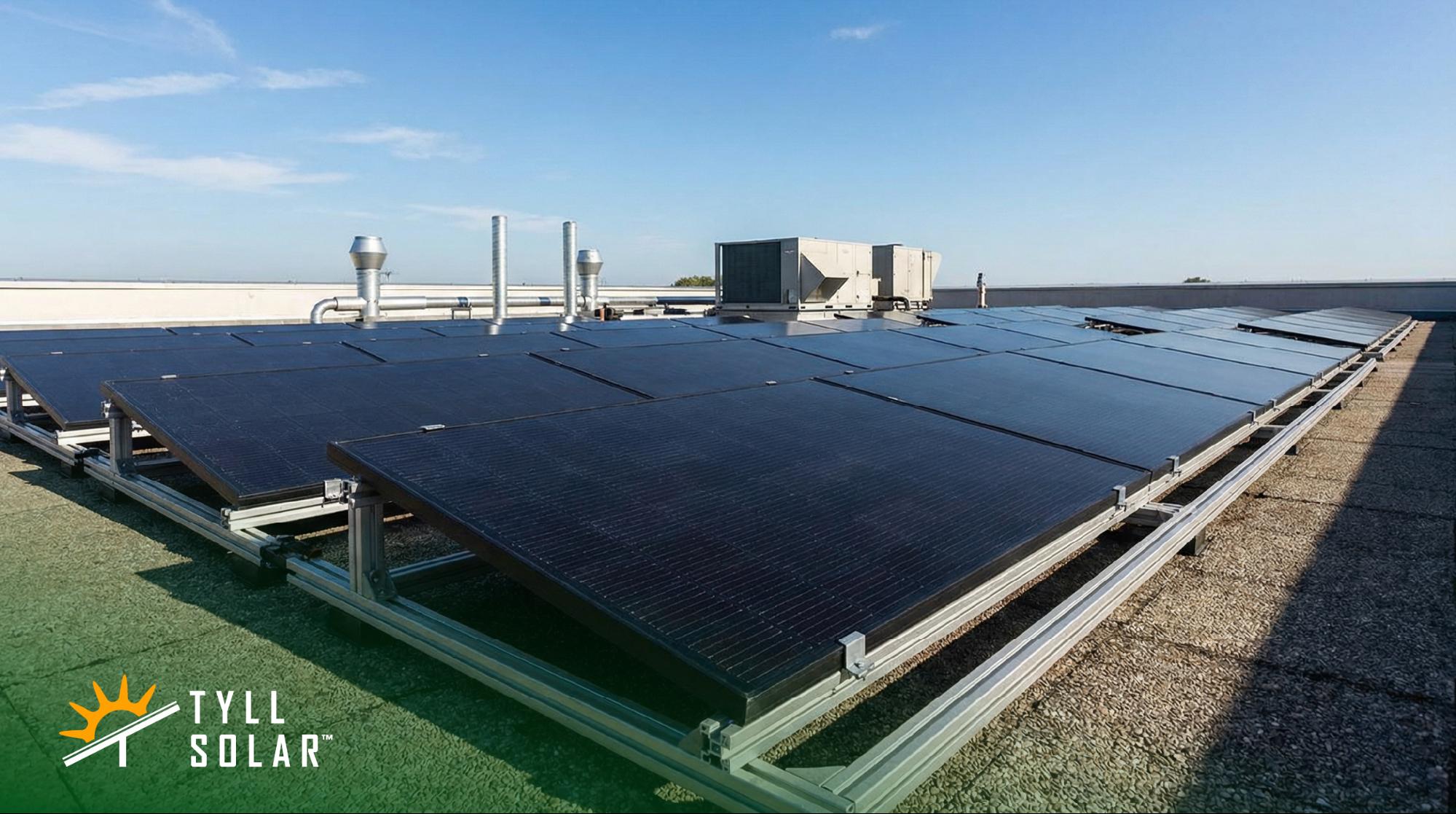
Photovoltaic-thermal technology (PVT) is opening new doors to the solar-powered future. A PVT panel produces both electricity and heat in a single panel – the reason it’s called “hybrid“ – and is able to maximize energy output and to optimize the yield of a solar array over its footprint. While various challenges have slowed widespread adoption of traditional PVT in the past, Tyll is breaking down these barriers and pioneering new technologies and opportunities in next generation PVT.
PVT’s Past: Available, Improving but Not Financially Practical
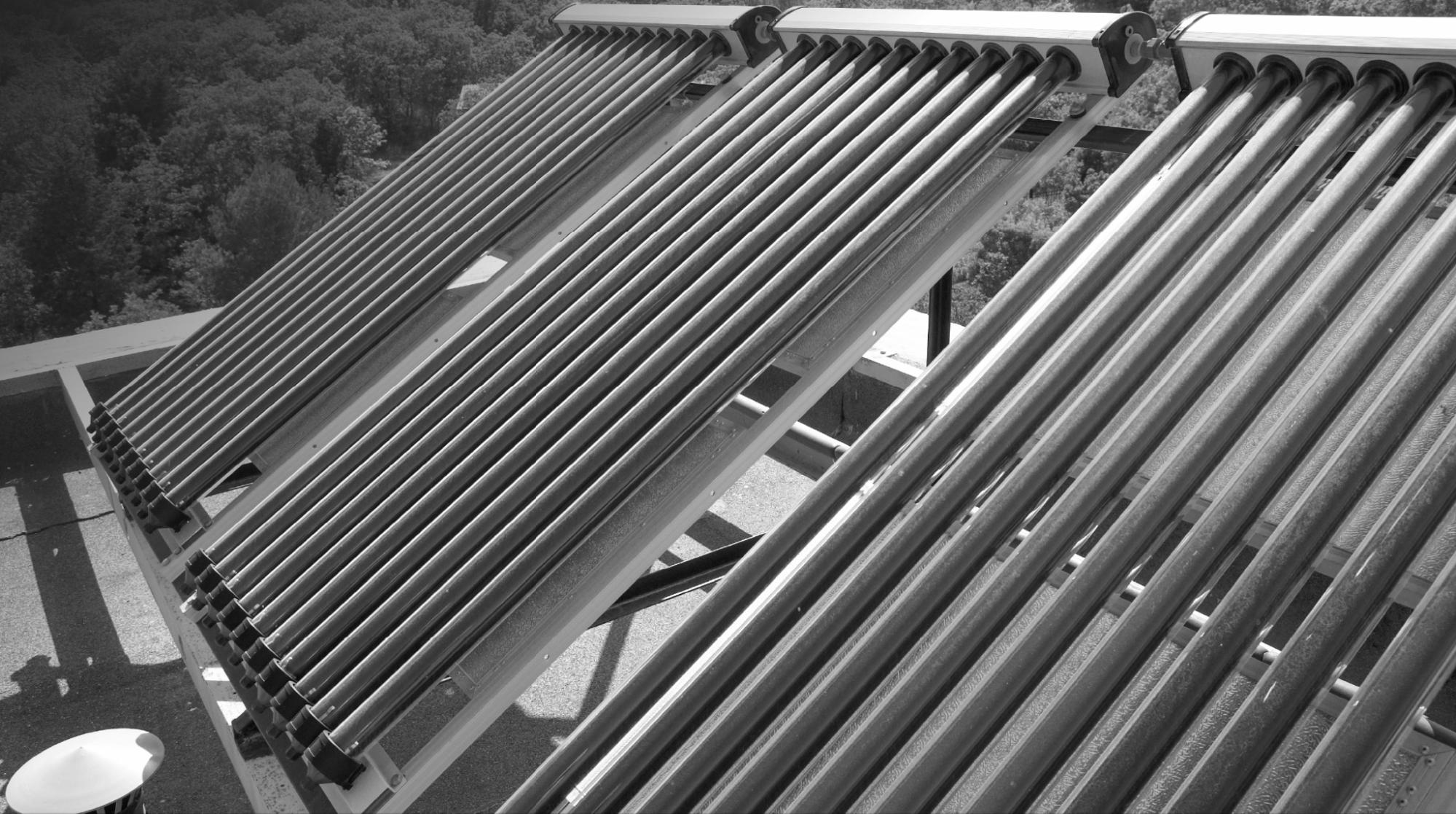
Both the “PV” and “T” components of PVT have been available for decades, including thermal solar devices that heat liquid with the sun’s energy while producing no electricity. But combining photovoltaics with thermal energy capture has faced challenges. Today, use of standalone PV is growing at an increasingly rapid pace: in the first nine months of 2024, over 90% of new energy to the grid in the U.S. came from renewables, with 78% coming from solar. At the same time, thermal technology is in use, but not integrated at scale with PV. Scalable PVT has had systemic impediments, including complex installation relative to PV and high costs that created barriers to entry for hybrid energy solutions. Jump to the bottom of this article to see important milestones in PVT’s development.
PVT’s Present and Future – Streamlined and Scalable
PV component cost reductions are creating a more level playing field for hybrid options, and Tyll’s proprietary system, which enables simplified installation, is poised to accelerate adoption of PVT thanks to the convergence of a number of enabling factors.
1. Installation Learning Curves
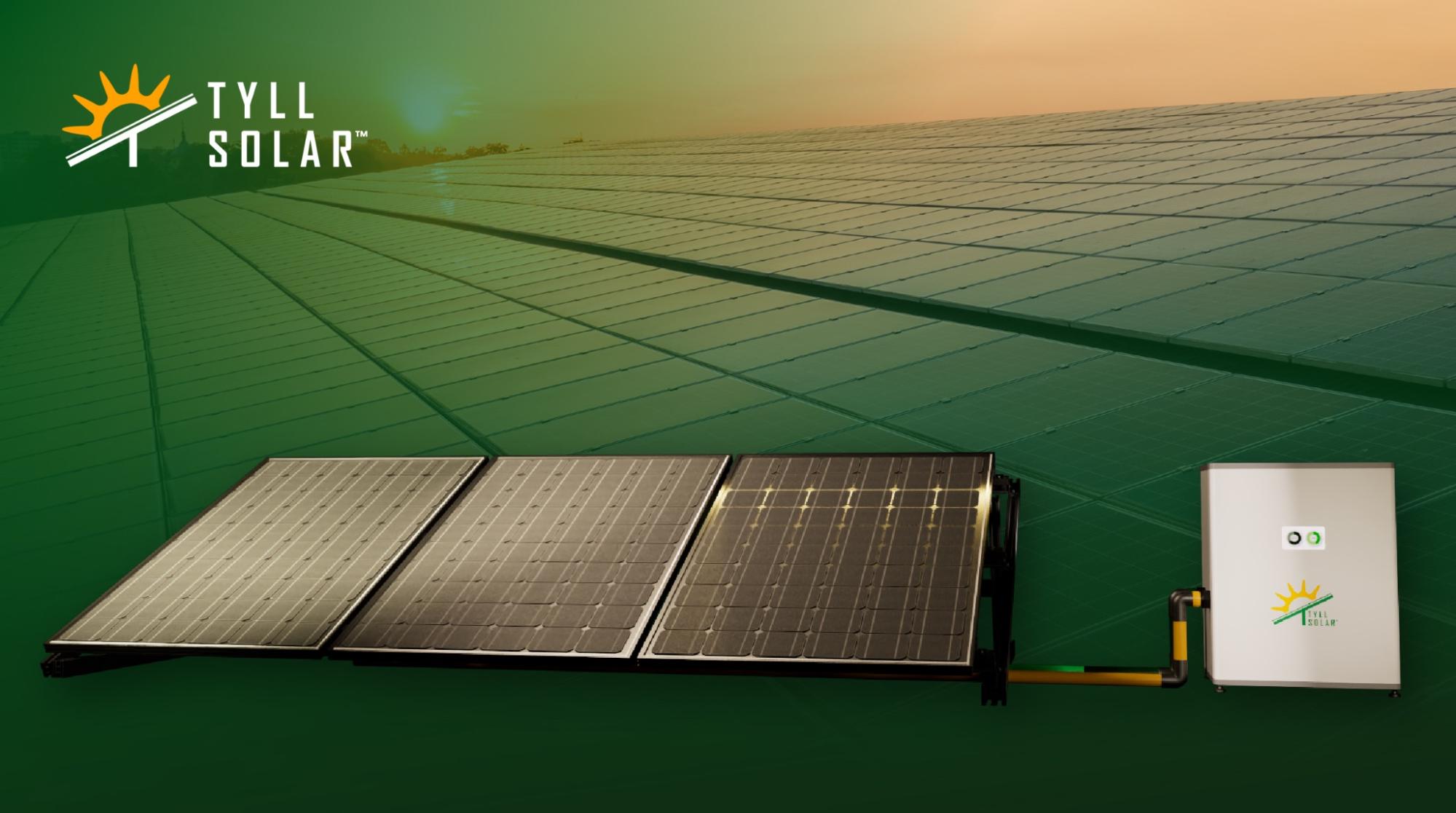
Integrating a new technical element into solar arrays meant new learning curves for installers. In turn, new learning curves can create delays and costs if not addressed upfront. Tyll’s Smartbox streamlines what has traditionally been a complicated installation process, enabling more efficient and scalable installation.
2. Applications / Integrations
PVT is complementing cost-effective building management, and giving companies additional resources to meet triple bottom line (TBL) and environmental goals. Technological advances have reduced costs per watt, making PVT a more practical and affordable option for commercial installations.
PVT:
-
- Integrates with building management systems (BMS), optimizing heat and electricity use.
-
- Pairs with combined heat and power (CHP) systems, improving energy efficiency and reducing waste.
-
- Reduces carbon footprint while making better use of on-site energy.
3. Integration With Heat Pumps
Until recently, it was inefficient to extract heat from cold air. Now, heat pumps are highly efficient, used in cold climates, and supporting a range of commercial and industrial applications. PVT’s integration with heat pumps can improve the potential additional ROI of a PVT system.
Join the New Wave of Hybrid Solar Energy
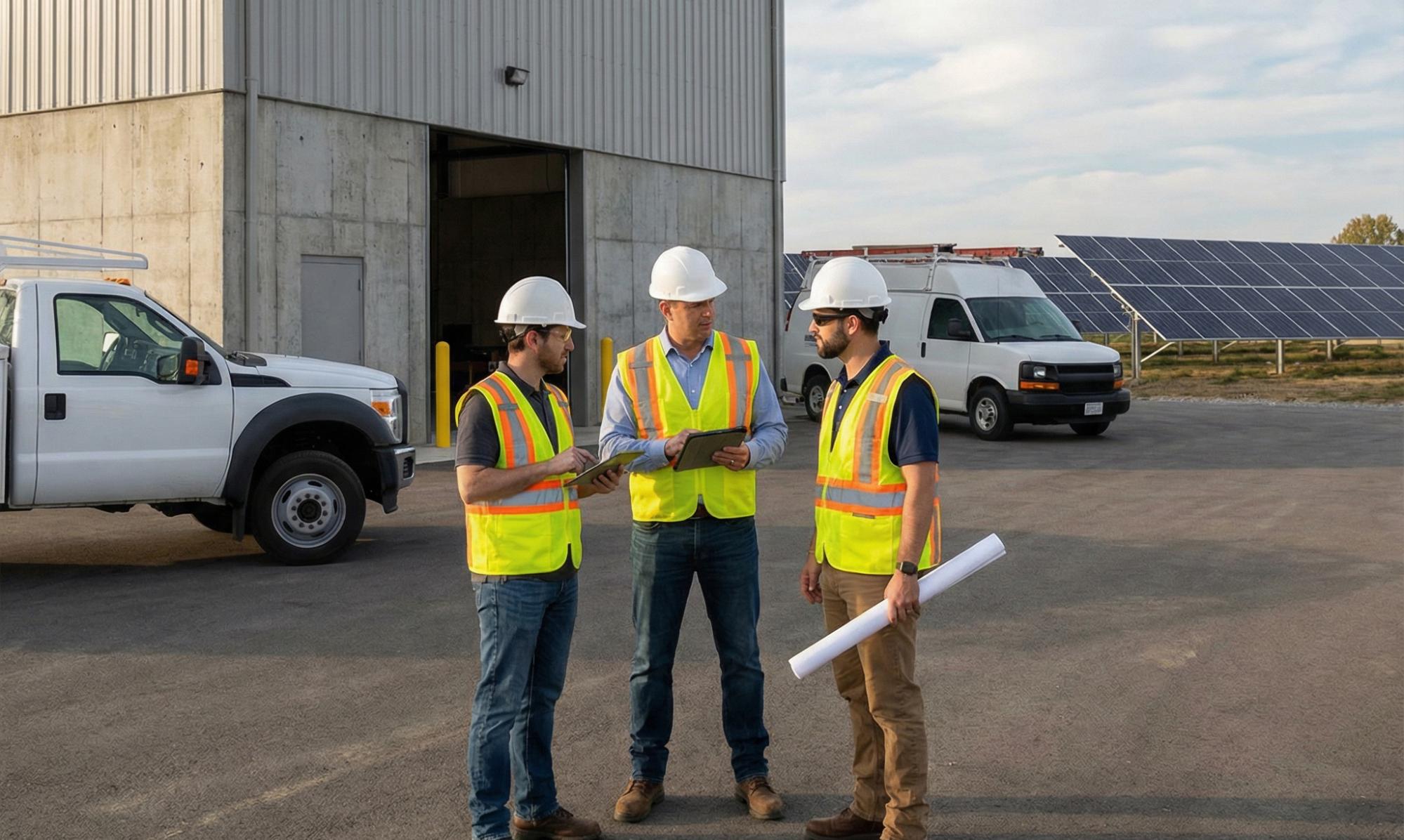
Tyll Solar is unlocking the power of hybrid solar energy. By eliminating installation barriers and providing scalable, cost-effective designs, Tyll is making large-scale PVT adoption a viable, beneficial reality for commercial and industrial users.
PVT is at an exciting inflection point with significant opportunities for forward-looking businesses and installers. Now is the time to seize these opportunities.
Get in touch with our team to learn more about ways to reap the rewards of PVT with Tyll Solar.
PVT Is Supported by a Rich History of Technological Advancements
Major Developments:
1839 – Photovoltaic (PV) effect discovered by Edmond Becquerel
1891– Baltimore inventor Clarence Kemp patented the first commercial solar water heater
1948 – The Dover Sun House was completed in Dover, Massachusetts, and used technology developed by Dr. Mária Telkes for solar heat.
1954 – Bell Labs develops silicon PV cells
1958 – The U.S. deploys the Vanguard Satellite, the first solar-powered satellite in space
1973 – The University of Delaware built “Solar One,” a 1,300 square foot house that used solar to generate both heat and electricity: a PV/thermal hybrid system.
- Roof-integrated arrays fed surplus power through a special meter to the utility during the day, and power was purchased from the utility at night.
- In addition to providing electricity, the arrays were like flat-plate thermal collectors; fans circulated warm air from over the array to heat storage bins.
- The thermal element was the heating system (using salts in a solar setting) developed by Dr. Telkes, of the 1948 Dover Sun House fame
1970s–1990s – Researchers Continue to Refine Ways to Combine PV With Thermal Collectors to Improve Efficiency by Cooling the Panels.
Late 1990s and early 2000s – Research by Tripanagnostopoulos, Chow, and Kalogirou established early, practical, and modeled approaches to PVT technology.
- High-efficiency PVT systems designed for simultaneous heat and electricity production saw significant development, with studies from the 2000s detailing specific water and air-based prototypes.
2010 – Tyll is founded, and continues to pioneer the future of solar energy through patented photovoltaic-thermal (PVT) technology.