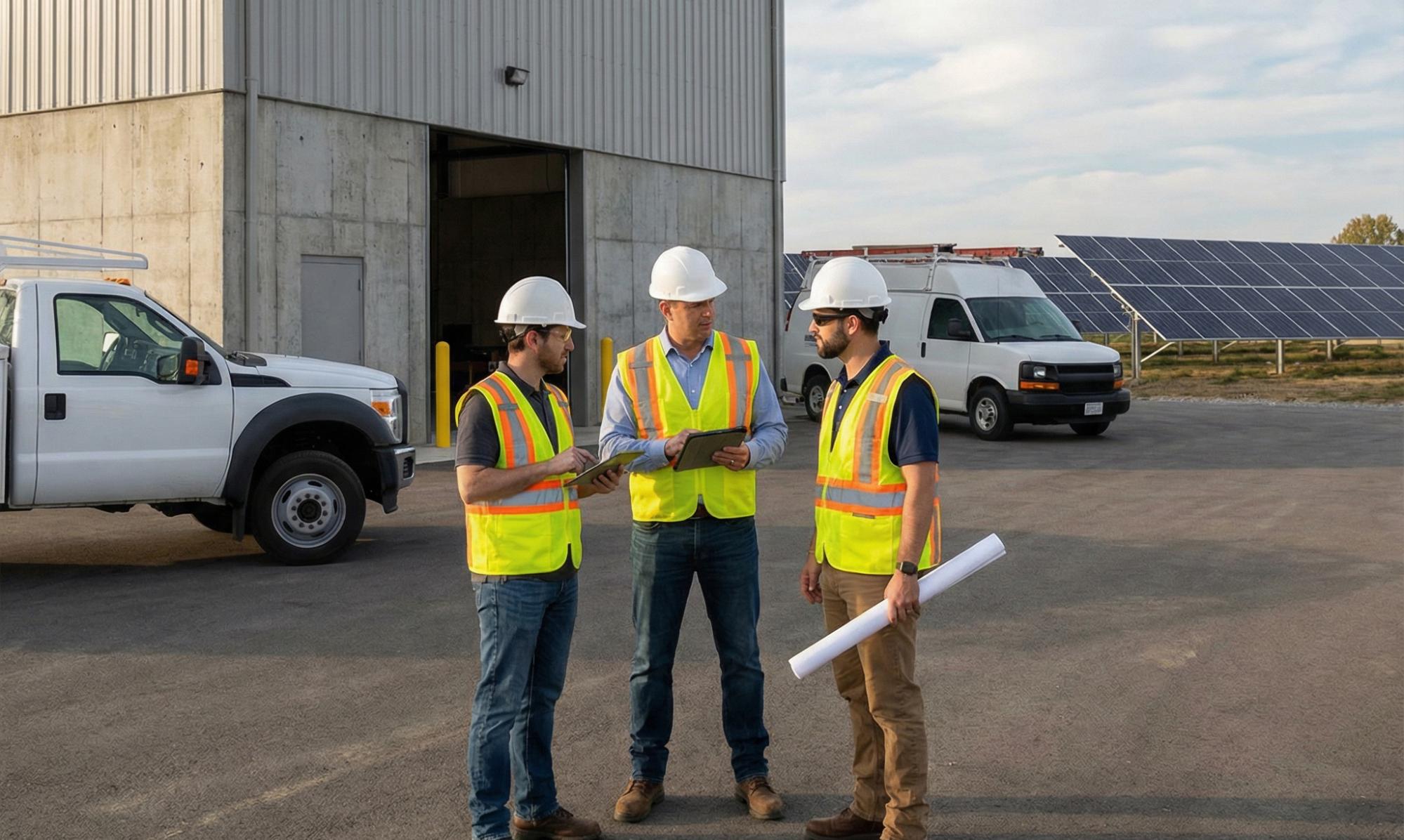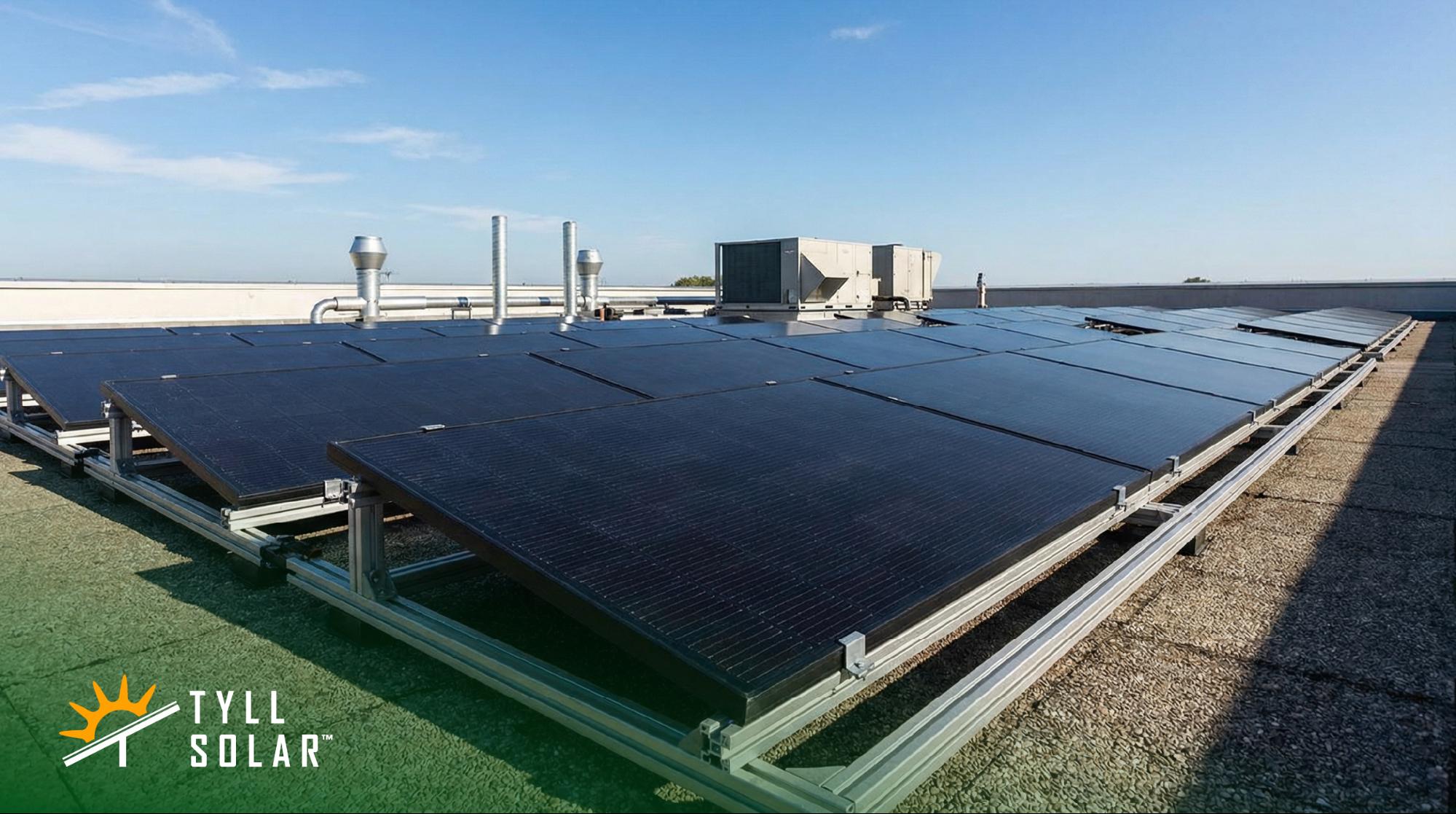
Rising energy costs, increasing grid volatility, and sustainability initiatives are driving businesses to rethink how they generate and use energy on-site. Traditional solar solutions have played an important role in this transition, but for many commercial, industrial, and institutional facilities, electricity alone doesn’t address the full span of energy demand.
That’s where hybrid photovoltaic-thermal (PVT) systems come in. PVT represents the next evolution of on-site solar energy by capturing both electricity and usable heat from the same footprint. Instead of letting excess heat go to waste, PVT turns it into a valuable resource.
Historically, PVT systems were seen as complex, costly, hard to install, and difficult to deploy at scale. Tyll Solar’s next-generation PVT technology changes that equation by removing many of the practical barriers that limited adoption in the past—making hybrid solar simpler, more efficient, and more commercially viable.
PVT 101 — What Is Photovoltaic Thermal Solar?
Photovoltaic thermal (PVT) solar is a hybrid technology that produces both electricity and heat simultaneously from a single system. By combining photovoltaic cells with an integrated thermal collection layer, PVT panels extract significantly more energy from the same sunlight than traditional solar modules.
The Basics of PVT
In a PVT system, photovoltaic cells on the front of the panel generate electricity in the same way as conventional solar PV. Beneath those cells sits a heat exchanger that captures heat from the sun that would otherwise be lost to the environment.
The captured thermal energy can be used for a wide range of applications, such as water heating, space heating, and industrial process heat.
There is also a benefit to removing heat from the panels: removing heat increases electrical output.
Why Capturing Heat Matters
For many commercial, industrial and other large facilities, heat represents a significant portion of total energy consumption and operating cost. So it’s no wonder that heating and cooling use nearly half of all energy consumed globally. By capturing and reusing this thermal energy, PVT systems dramatically improve overall site energy efficiency—without requiring additional roof or land area.
Instead of choosing between power or heat, PVT enables facilities to address both needs at once.
PVT vs. Solar Thermal vs. Traditional PV
Understanding the value of PVT starts with comparing it to traditional solar technologies.
Traditional PV
Traditional photovoltaic systems generate electricity only. While effective, heat buildup can reduce panel efficiency, particularly in hot climates. In snowy regions, efficiency can also be curtailed when panels are covered with snow for extended periods.
On the plus side, PV panels are widely available and can be manufactured across the globe, with both domestic and imported options supporting large-scale deployment.
Solar Thermal
Solar thermal systems are designed to produce heat only, typically for water or space heating. While efficient for specific thermal applications, they do not generate electricity, which limits flexibility and overall return on investment.
Solar thermal manufacturing often requires specialized production lines that are not compatible with traditional PV manufacturing, and adoption has historically been concentrated in Europe, with more limited penetration in other markets.
Hybrid PVT
Hybrid PVT systems combine the strengths of both technologies. They generate electricity and usable heat from the same panel footprint, significantly increasing total energy yield, often delivering three to four times more usable energy than PV alone.
By actively removing heat from the photovoltaic cells, PVT panels improve electrical performance, with cooling effects that can boost output by approximately 3% for every 10°C of temperature reduction.
While PVT was first adopted more broadly in Europe, it is now expanding into new regions.
The Benefits of Capturing the Sun’s Heat
Higher Total Energy Yield
By converting sunlight into both electrical and thermal energy, PVT systems maximize energy harvested per square meter. This makes them especially valuable for energy-intensive sites or locations with limited available space.
Lower Energy Costs and Faster Payback
PVT reduces dependence on both utility electricity and fossil-fuel-based heating. By offsetting multiple energy loads simultaneously, hybrid systems can significantly shorten payback periods and improve long-term operating economics.
Improved Performance Year-Round
In warm conditions, panel cooling enhances electrical output and system reliability. In colder regions, thermal recovery can help prevent snow buildup, shoring up production during winter months when traditional PV systems may underperform.
A Strong Fit for Commercial and Industrial Applications
PVT is particularly well-suited for facilities with consistent thermal demand, including:
- Food and beverage processing and industrial manufacturing, where process heat and hot water are critical
- Campuses, healthcare facilities, and multifamily buildings seeking space heating and peak demand reduction
- District energy systems and large-scale urban installations aiming to maximize efficiency from limited space
Conclusion: Why PVT
PVT represents a smarter, more comprehensive approach to on-site energy—one that captures more value from the same solar investment. By addressing both electrical and thermal demand, hybrid systems unlock efficiency gains that traditional technologies leave on the table.
Tyll Solar’s PVT solution stands apart by eliminating complexity through installer-friendly design, intelligent controls, and plug-and-play installation. As energy users demand higher efficiency, greater resilience, and stronger returns, hybrid PVT is no longer a future concept. It’s a practical solution available today.
Follow Tyll Solar on LinkedIn for the latest insights on PVT and next-generation solar innovation.